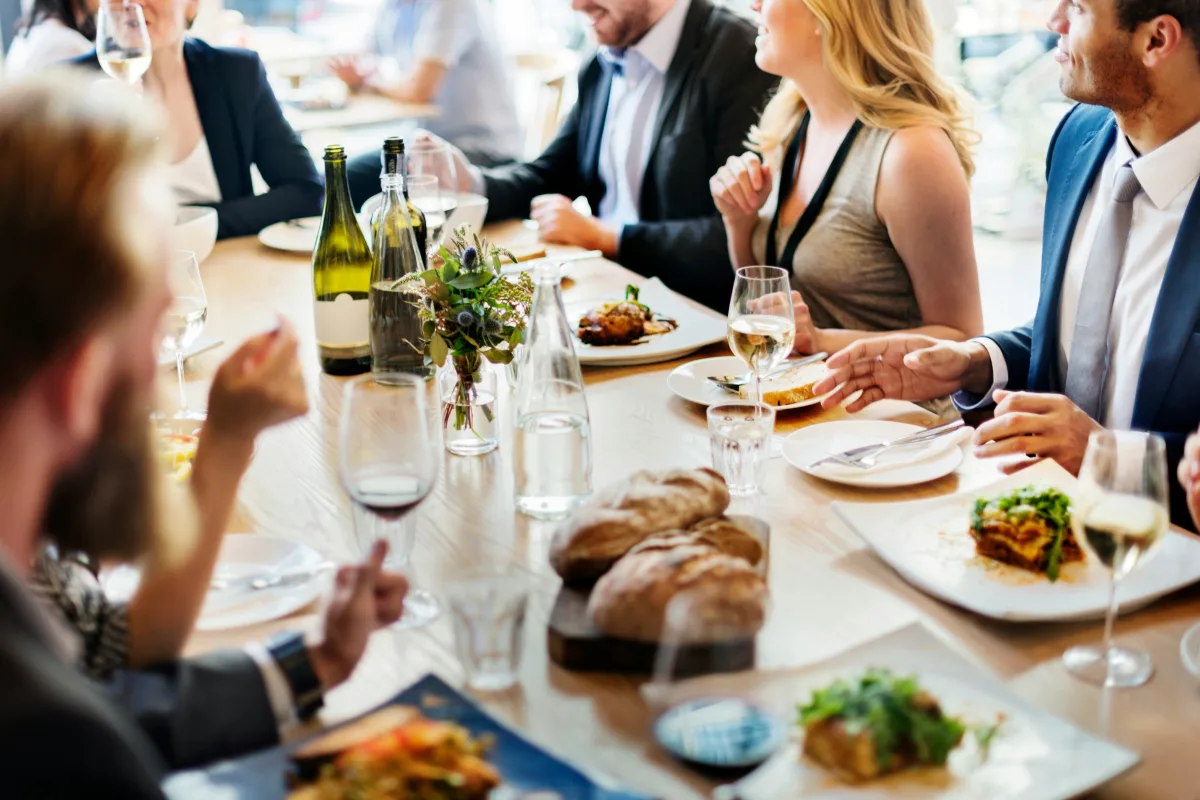
Planning a dinner for two in an unfamiliar destination is straightforward: you browse a couple of neighborhood dining guides, check real-time availability on an app, and confirm a table. Organizing a dinner for eight, twelve, or twenty people in a city where you do not live is an entirely different operational challenge. What begins as an innocent desire to bring friends, family, or colleagues together often devolves into an administrative headache marked by rigid cancellation windows, surprise food and beverage minimums, and logistical gridlock.
When you take a large group out to eat, you are not merely reserving chairs; you are entering into a commercial partnership with a restaurant’s kitchen and front-of-house staff. In a market where you lack local intuition, navigating that dynamic requires a systematic approach. By treating venue selection, headcount management, and service logistics with the precision of an event planner, you can ensure that your group enjoys an exceptional meal without the friction that typically derails communal dining.
Establish Your Headcount and Non-Negotiables Early
The single greatest mistake organizers make is searching for venues before establishing a locked headcount. In the restaurant industry, table inventory is strictly compartmentalized. A party of six is often the ceiling for a standard dining room booking; once your party hits eight, ten, or twelve, you cross an invisible threshold into large-party dining or private event sales.
Start by setting a firm RSVP deadline at least three weeks ahead of your target date. Explain to your guests that reservations in major culinary hubs require financial commitments and that empty seats can incur penalty fees.
Simultaneously, collect dietary restrictions before you begin looking at menus. Discovering that two guests are celiac, one is vegan, and another has a severe shellfish allergy after you have paid a deposit on a traditional seafood boil or steakhouse will compromise the experience for everyone. A successful organizer matches the group’s collective restrictions to the core strengths of the kitchen, rather than forcing the kitchen to scramble with off-menu accommodations during service.
Decode the City Geography and Dining Flow
When you do not know a city well, maps can be deceptive. A restaurant that appears to be two miles from your hotel might require a forty-five-minute trek through bridge bottlenecks or dense urban traffic during the evening rush.
Prioritize Geographic Convenience Over Hype
For large gatherings, prioritize logistical ease over chasing trend-driven culinary hot spots on the opposite side of town. Moving eight or more people across an unfamiliar city in multiple ride-shares introduces variables you cannot control: delayed drivers, split parties, and late arrivals that jeopardize your reservation window. Anchor your venue search within walking distance of where the group is staying, or pick a neighborhood that offers direct, predictable transit connections.
Scrutinize Room Layout and Acoustic Profile
A restaurant can have world-class food and still make a miserable venue for a large dinner if the acoustics are poorly calibrated. Cavernous spaces featuring concrete floors, exposed ductwork, and floor-to-ceiling glass windows look striking in architectural photography, but they act as echo chambers. When ambient noise levels spike, people seated at opposite ends of a long rectangular table cannot hear one another, fracturing the table into separate, strained conversations.
When researching venues:
-
Look closely at interior photographs for sound-dampening elements such as upholstered banquettes, acoustic ceiling tiles, thick drapery, or carpeted floors.
-
Request a round or oval table whenever possible; round seating arrangements democratize conversation and allow everyone to engage collectively.
-
If your group exceeds ten guests and you want genuine interaction, pass on the main dining floor entirely and inquire about a dedicated semi-private or private dining room.
Navigate Reservation Windows and Large-Party Policies
In high-demand dining cities like New York, Chicago, San Francisco, or Austin, prime tables for regular patrons drop anywhere from fourteen to thirty days in advance. However, large parties operate on a much longer timeline.
If you wait for the standard public booking window to open on OpenTable, Resy, or SevenRooms, you will often find that tables for eight or more are completely blacked out. Restaurants reserve their large footprints for private events or set-menu seatings handled directly through an in-house events coordinator.
Reach out directly to the restaurant four to six weeks in advance via their designated events email or phone line. When you contact them, provide your exact party size, flexible time parameters, and an acknowledgment of their service structure. Showing the manager that you understand professional hospitality protocols immediately elevates your inquiry above casual online requests.
Be prepared to navigate standard contractual terms:
-
Food and Beverage Minimums: Many establishments waive room rental fees in exchange for a guaranteed minimum spend on food and alcohol combined. Calculate whether your group’s realistic consumption aligns with this figure before signing.
-
Credit Card Authorizations and Deposits: Expect to put down a card to hold the table, with deposits ranging from twenty dollars per person to fifty percent of the anticipated spend.
-
Cancellation Windows: Large-party cancellation policies are strict. While a regular table might allow cancellations up to twelve hours prior, group bookings often require forty-eight hours to seven days of notice to avoid forfeiting deposits or paying per-person cancellation penalties.
Choose the Right Service Format for the Table
Ordering à la carte for a table of ten or more creates operational friction for the kitchen. When every guest orders different starters and mains with individual temperature preferences and modifications, ticket times slow to a crawl, and dishes inevitably arrive lukewarm or staggered across fifteen minutes.
The Superiority of Family-Style Dining
The most successful group dinners rely on communal, shared formats. Cuisines that naturally center on shared plates—such as Spanish tapas, Italian trattoria fare, Middle Eastern mezze, and family-style Cantonese or Sichuan dining—foster immediate energy and conversation. Plates arrive continuously, guests pass platters across the table, and everyone samples a wide spectrum of the restaurant’s best offerings.
Curated Prix Fixe and Chef Menus
If you prefer a plated dining experience, opt for a preset, multi-course menu agreed upon in advance. Most high-volume restaurants mandate a limited-choice prix fixe for parties over eight. This setup allows the kitchen to batch-cook and fire courses synchronously, ensuring your food arrives hot and on schedule. It also establishes a clear, predictable cost per person before anyone sits down, eliminating awkward financial calculations at the end of the night.
Master On-Site Execution and Bill Management
How you handle the final thirty minutes of a dinner often dictates the lasting impression of the entire evening. The arrival of the check can instantly deflate a vibrant atmosphere if the payment strategy has not been arranged in advance.
Never Request Split Checks at the Table
Asking a busy server to run eight individual credit cards with different amounts, item-by-item, is an unnecessary operational bottleneck. Many independent restaurants explicitly prohibit split checks on large parties, and those that permit it will lose twenty minutes processing transactions while your party waits awkwardly to leave.
Instead, implement the single-payer protocol. Designate one person ahead of time to place their card down for the entire bill. Once the receipt is settled, calculate the per-person total and have attendees reimburse the payer immediately through digital payment platforms like Venmo, Zelle, or Splitwise.
Account for the Hidden Line Items
When calculating expected costs for your group, remember that the menu price is only the baseline. Group dining statements invariably include additional charges that catch uninitiated organizers off guard:
-
Automatic Gratuity: Parties of six or more almost universally trigger an automatic service charge between eighteen and twenty-two percent.
-
Local Hospitality Taxes: State, county, and municipal dining taxes can add between six and eleven percent depending on the jurisdiction.
-
Administrative or House Fees: Some venues tack on a three to five percent event or administrative fee for large-party coordination, which often does not go directly to service staff.
Always factor a twenty-five to thirty percent buffer on top of the food and beverage subtotal when quoting estimated costs to your attendees.
Plan the Margins of the Evening
A group dinner rarely begins precisely at the reservation time. In an unfamiliar city, guests will get lost, miss trains, or underestimate elevator waits in high-rise hotels.
To keep the reservation on track, set your group call time fifteen to twenty minutes before the actual booking. Scout the neighborhood for a nearby hotel lobby bar, rooftop, or casual taproom where early arrivals can gather for a pre-dinner drink. This creates a buffer zone, ensuring your entire party is assembled and ready to be seated the moment the host stands to escort you to the table. Restaurants have strict table turns for group seatings—often capping dinner slots at two to two-and-a-half hours—and losing twenty minutes waiting for stragglers in the foyer compresses the entire meal.
By establishing firm parameters early, respecting the operational realities of the venue, and handling payments with clean efficiency, you turn what could be a chaotic logistical challenge into a polished, memorable evening that highlights the best of the city’s culinary culture.